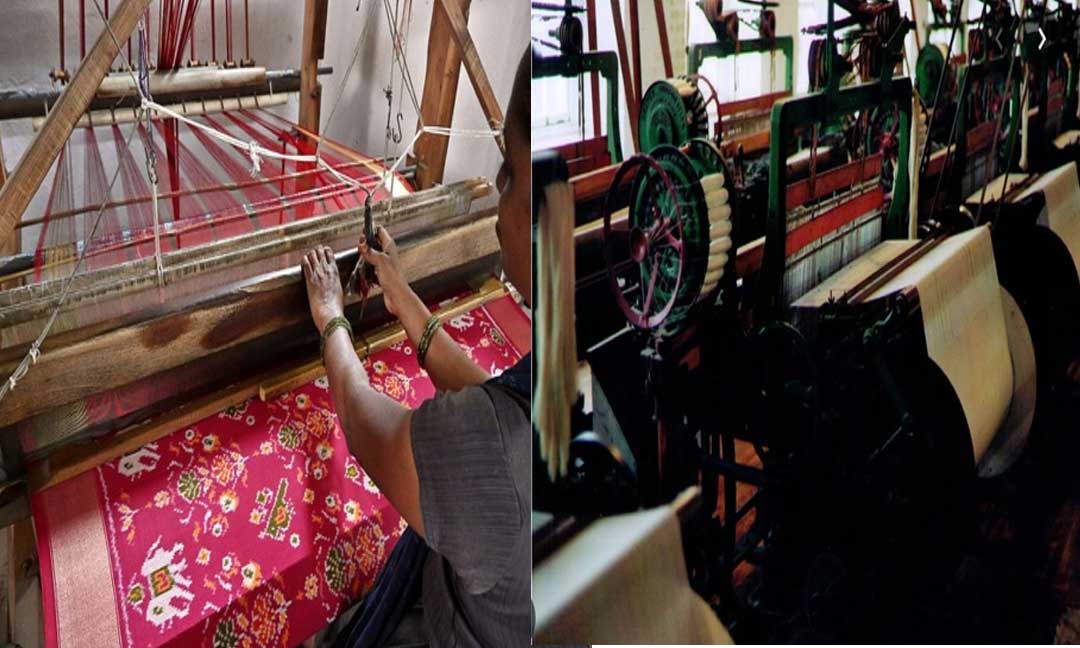

Mangaluru : Karnataka is rapidly strengthening its position as a global textile powerhouse by seamlessly blending its ancient handloom traditions with modern industrial capabilities. Recently, the National Gallery of Modern Art in Bengaluru inaugurated the “Textiles of Karnataka” exhibition, showcasing the state’s diverse craftsmanship ranging from world-famous Mysore and Molakalmuru silk sarees to traditional Ilkal sarees and Lambani embroidery. Contributing significantly to the nation’s textile landscape, Karnataka accounts for about 43% of India’s mulberry silk and 32% of total raw silk production, alongside a substantial share in national garment manufacturing and exports.
The state’s rich textile legacy is deeply rooted in geographical indication (GI) tagged products that have gained international acclaim for their unique weaving techniques and cultural significance. Traditional items such as Udupi sarees, Guledgudda Khana, Navalgund durries, and Sandur Lambani embroidery represent more than just commercial goods—they embody the identity and heritage of generations of skilled artisans. To protect this vital sector from the pressures of modern industrial competition, the government has introduced visionary initiatives like the new Textile and Apparel Policy (4.0) 2026–31, aimed at modernizing production, attracting investments, and generating widespread employment opportunities.
Embracing innovation and sustainability, Karnataka is also pioneering eco-friendly textiles derived from agricultural waste, notably utilizing banana fiber to create biodegradable fabrics, eco-friendly sanitary pads, and home decor items. Furthermore, major industrial milestones such as the upcoming PM Mega Integrated Textile Region and Apparel (PM MITRA) Park spanning 1,000 acres in Kalaburagi, alongside 11 operational textile parks across the state, are set to build a complete value chain from fiber to fashion. To further support local weavers, state government employees proudly wear khadi attire on the first Saturday of every month to promote domestic patronage.
Chief Secretary Dr. Shalini Rajneesh emphasizes that transforming Karnataka’s traditional weaving sector into a globally competitive ecosystem requires unified branding, digital marketing, technology adoption, and robust export promotion strategies. By fostering research, upgrading machinery, and establishing dedicated retail networks and e-commerce platforms, the state aims to secure a prosperous livelihood for artisans. Citizens are encouraged to embrace handloom and khadi products, honoring the dedication of local weavers and driving sustainable economic growth across the region.


Recommended for you
-
69


-
873



Leave a Reply
Leave a Reply
Posted in: Regional News, Latest News, News, top-featured