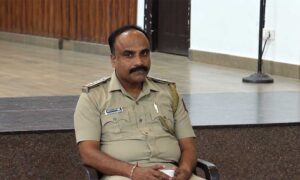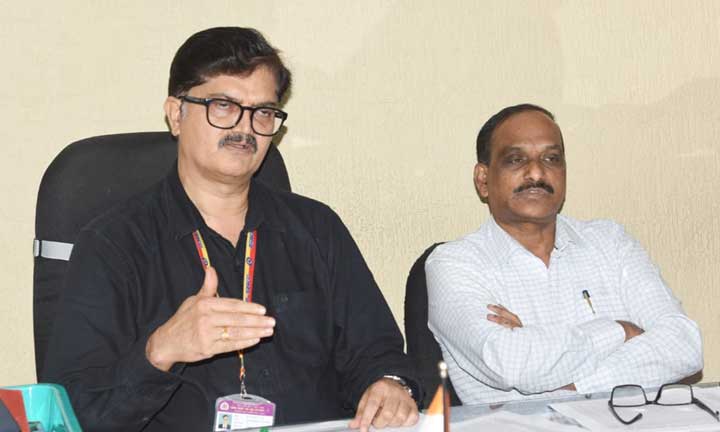

Mangaluru : During a press conference held on Friday, Dr. Shivaprakash, the Superintendent and District Surgeon of Wenlock District Hospital in Mangaluru, made a critical appeal to medical facilities regarding patient referrals. He stressed that before transferring critical patients to Wenlock for emergency care, referencing hospitals must verify the availability of ICU beds. To streamline this process, the hospital has already set up a dedicated help desk and public relations officer system. Furthermore, plans are underway to implement a real-time web portal that will display accurate information about bed availability for public and institutional convenience.
Wenlock Hospital regularly receives an influx of critical patients from 31 districts across Karnataka as well as neighboring Kerala under the Ayushman Bharat Arogya Karnataka (ABARK) scheme. Although the hospital is equipped with 116 ICU beds, it frequently faces a severe shortage due to the high volume of incoming emergencies from outside Dakshina Kannada. Dr. Shivaprakash pointed out that sending patients in critical conditions without checking bed availability aggravates their health risks during transit. When terminally ill patients are brought in at the eleventh hour and beds are full, it inadvertently damages the hospital’s reputation despite the staff’s best efforts.
To address this systemic bottleneck, the superintendent has formally written to the Commissioner of the State Health and Family Welfare Department, requesting a comprehensive set of interstate and interdistrict referral guidelines. The letter proposes a strict 10-point guideline framework that other district hospitals must satisfy before making a referral. These points would clarify specific clinical reasons, immediate medical necessities, and verification of available ICU and ventilator support at the receiving end, thereby preventing blind transfers.
When patients are referred via ABARK from other sectors, Wenlock Hospital never delays admission if an ICU bed is open. However, in cases where beds are completely occupied, staff members guide the families to nearby empanelled private hospitals for immediate care under the same government scheme. This procedural transition naturally takes a little time, and Dr. Shivaprakash noted that it is unfair to blame Wenlock for negligence in such instances. State-level regulatory intervention is necessary to manage critical scenarios like spinal cord fractures, brain hemorrhages, and neck injuries, which require immediate ICU lodging and leave zero room for unexpected transit delays.
The hospital administration has already submitted a proposal for an additional 50 ventilator beds to cope with the demand. Currently, the 116 ICU beds include 21 medical ICUs and 27 surgical ICUs. However, expanding physical infrastructure alone will not solve the crisis, as increased beds require a proportional spike in skilled nursing staff. Ideally, an ICU requires one nurse for every two beds, a ventilator setup requires a 1:1 ratio, and post-operative ICUs require one nurse for every four beds. Dr. Shivaprakash confirmed that these human resource requirements have been discussed with Health Minister U.T. Khader.
Expressing his concern, District Health Officer (DHO) Dr. Thimmaiah remarked that it is deeply unfortunate that patients are pushed into transit chaos despite most districts having their own functional government medical colleges. He echoed that a centralized interdistrict referral protocol must be enforced immediately by the state. Addressing the financial aspect of the ABARK scheme, Dr. Thimmaiah clarified that empanelled private hospitals are strictly prohibited from charging patients out-of-pocket for referred treatments. The department is monitoring compliance and will penalize offending institutions, while Health Minister U.T. Khader is scheduled to hold a state-level meeting to review package revisions and operational challenges soon.


Recommended for you
-
1.1K


-
1.4K


-
781


Leave a Reply
Leave a Reply
Posted in: Regional News, Latest News, News, top-featured