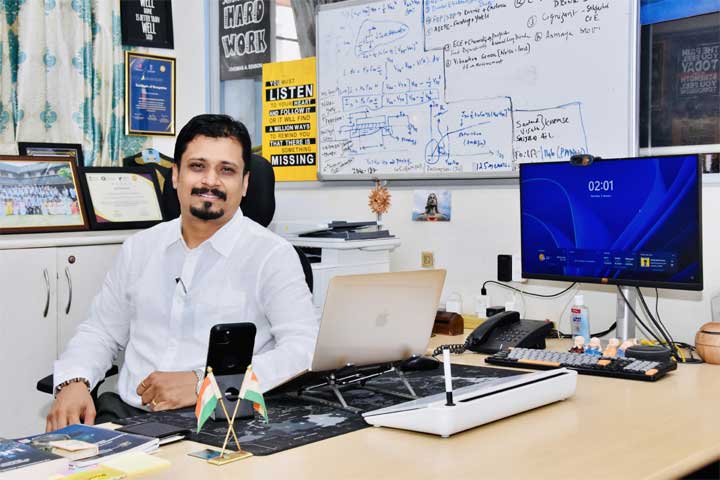

Mangaluru : The landscape of modern engineering is undergoing a significant shift, moving away from isolated disciplines toward an integrated approach that combines Electronics, Semiconductors, and Computer Engineering. According to Dr. Anush Bekal, Head of the ECE Department at Sahyadri College of Engineering & Management, the fastest-growing technological domains today are shaped by the integration of physical hardware and computational intelligence. This synergy is evident in daily technologies such as electric vehicles, medical imaging, and smartphones, where electronic sensors capture data and software algorithms process it for decision-making.
Recognizing this strategic importance, the Government of India has launched the India Semiconductor Mission (ISM) with an outlay of ₹76,000 crore to build a domestic ecosystem in chip design and manufacturing. Major investments are surfacing across the country, including the Tata–PSMC Fab in Gujarat and Micron’s facility in Sanand. Regionally, coastal Karnataka is also aligning with this growth, with companies like KARMIC Design and RDL Technologies supporting semiconductor-linked competencies through embedded systems and automation.
To meet the projected demand of over 400,000 professionals by 2030, academic preparation must evolve. Dr. Bekal emphasizes that future engineers need a spectrum of skills ranging from semiconductor physics to scripting languages like Python and Verilog. As modern systems increasingly operate at the boundary of “Circuits and Code,” the future belongs to those who can master both hardware and software to drive India’s technological innovation.



Leave a Reply
Leave a Reply
Posted in: Regional News, Latest News, News, top-featured