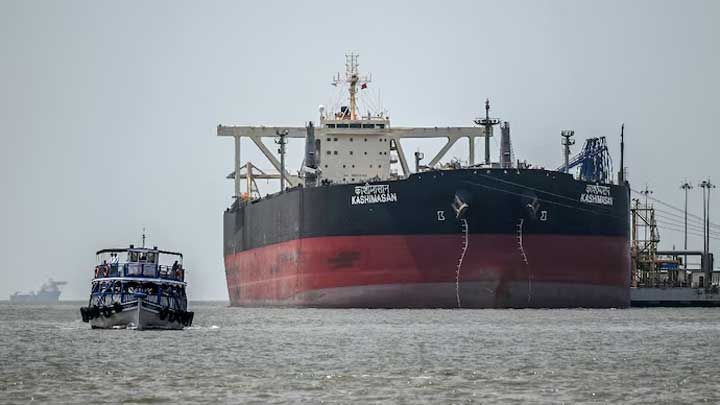

Mangaluru : A Chief Engineer from Mangaluru, serving on an LPG tanker, has shared a harrowing 21-day account of being stranded in the Strait of Hormuz due to the escalating conflict between Iran, Israel, and the US. The sailor, who has 15 years of experience and has crossed the strait over 21 times, described this as an unprecedented and terrifying challenge. The ordeal began on February 28 in Kuwait while loading 40,000 metric tons of LPG. During the process, missile and drone attacks commenced nearby, forcing the ship to leave the port with only half its cargo. Although they eventually completed the loading, they witnessed drone strikes on adjacent jetties and constant retaliatory operations in the vicinity.
As the vessel attempted to depart, news arrived that Iran had closed the Strait of Hormuz, forcing the crew to seek refuge in Sharjah. During the two-day journey to Sharjah, they stocked up on essential supplies for two months amidst a climate of extreme uncertainty and panic. While anchored near Abu Musa Island, they witnessed intense combat. Reports arrived of attacks on Thai vessels and oil tankers near Iraq. During this period, the Indian government provided guidance, stating that movement would only be allowed after obtaining permission from Iran. Tragically, a fellow Indian captain on a nearby ship died of a heart attack during the standoff; due to the war, UAE rescue forces could not reach him for eight hours, and his body remains in the UAE.
The journey resumed on March 4, but the ship remained stationed 10 miles from Hormuz for 15 days awaiting clearance. Protection arrived in the form of Indian Naval ships INS Nandadevi and INS Shivalik. Navigating the waters was treacherous as Iran had deployed “sea mines”—explosives that could destroy any ship on contact. The only safe passage was a narrow channel between two islands, but further delays occurred following the assassination of the Iranian Foreign Minister. The crew faced a moment of extreme danger when Iranian authorities warned them to turn back or face destruction, as their LPG cargo made them a high-risk target. After a difficult U-turn and further waiting, they finally reached Muscat under the escort of five Indian Naval vessels.
The vessel finally reached the Kandla port in Gujarat on March 27, where a portion of the LPG was unloaded. Currently, the ship is in Mumbai for further offloading and is scheduled to arrive in Mangaluru in the coming days. Reflecting on the experience, the sailor noted that despite the missile strikes that damaged 17 vessels and claimed the lives of three Indian sailors, their ship fortunately escaped physical harm. He expressed profound relief at reaching Indian waters after living in constant fear for nearly three weeks, marking this as the most challenging chapter of his professional maritime career.


Recommended for you
-
3.0K


-
450


-
555



Leave a Reply
Leave a Reply
Posted in: Latest News, News, Regional News, top-featured