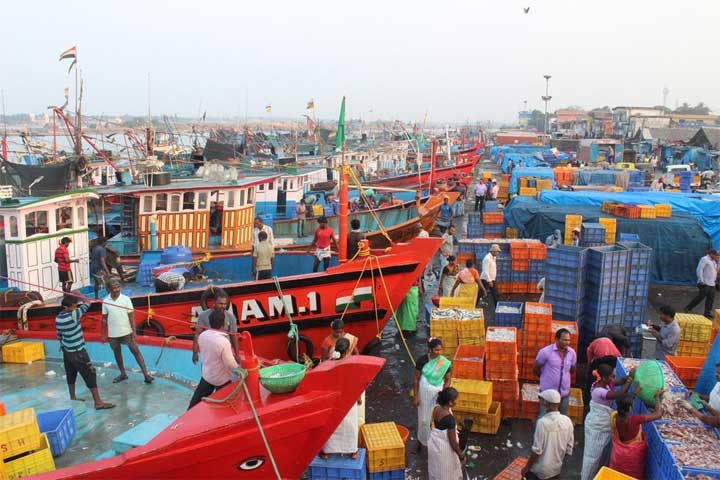

Magaluru : The annual two-month ban on mechanized and trawl boat fishing has officially commenced across coastal Karnataka, spanning from June 1 to July 31. At the local fishing harbor, the chaotic hustle has vanished, replaced by the quiet sight of a few remaining laborers clearing out fish boxes from the vessels and stacking them neatly along the docks. The otherwise congested entry roads, usually packed with a relentless stream of tempos, auto-rickshaws, and two-wheelers, now wear a deserted look, while nearby tea stalls and eateries have shuttered due to a complete lack of customers.
The bustling jetties have transformed into a massive parking lot for ships, with hundreds of diverse fishing boats securely anchored in neat rows. Due to a severe space crunch at the primary and secondary docks, numerous vessels have been routed to alternative anchoring spots like the third phase, Bengre, Battheri, and Kulur. Over the next sixty days, fishermen plan to fully utilize this mandatory downtime to overhaul their vessels, undertaking essential maintenance, mechanical repairs, and fresh coats of paint to prepare for the upcoming fishing season.
With deep-sea operations completely halted along the local coast, seafood consumers will now have to rely heavily on interstate supplies. Fresh fish will be imported from distant hubs like Gujarat and Chennai, packed tightly in layers of commercial ice; however, locals note that these imports lack the appeal of a fresh catch and come with a significantly higher price tag. Although traditional country boat (country-craft) fishing will resume once the monsoon intensifies, their yield remains minimal, with the limited catch being sold off instantly in local pockets rather than reaching the main city markets.
The seasonal freeze has also triggered a massive reverse migration of the port’s workforce, given that nearly 90 percent of boat crews and dock laborers hail from faraway states like Jharkhand, Bihar, Odisha, Tamil Nadu, and Andhra Pradesh. With operations completely paused, these migrant laborers have headed back to their hometowns, scheduled to return only when the ban lifts. This two-month hiatus leaves a massive economic void, forcing not just fishermen, but also ice factory workers, transport drivers, and processing plant employees to hunt for temporary alternative livelihoods to sustain themselves.



Leave a Reply
Leave a Reply
Posted in: Regional News, Latest News, News, top-featured